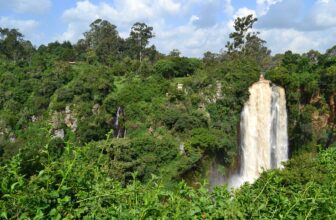
Welcome to the awe-inspiring world of Angel Falls, the tallest waterfall on the planet, located in the heart of Venezuela’s Canaima National Park. Nestled within the lush landscapes of the Gran Sabana region, Angel Falls is a natural wonder that captivates visitors with its sheer beauty and breathtaking descent from the summit of Auyán-tepui.
Auyán-tepui: The Birthplace of Angel Falls
Angel Falls owes its existence to the impressive Auyán-tepui, a massive table mountain that rises dramatically from the surrounding terrain. The falls, named after Jimmy Angel, an American aviator who first spotted them in 1933, cascade from the edge of the tepui, creating a mesmerizing spectacle of nature’s power and grace.
Soaring Heights: The Tallest Waterfall in the World
Standing at a staggering height of 3,212 feet (979 meters), Angel Falls is a testament to the grandeur of the natural world. The water descends in a free fall, generating a fine mist that creates rainbows in the sunlight. The sight of Angel Falls against the backdrop of Auyán-tepui’s sheer cliffs is truly a once-in-a-lifetime experience.
Getting There: A Journey into the Venezuelan Wilderness
Accessing Angel Falls is an adventure in itself. Visitors typically start their journey in the city of Ciudad Bolívar and embark on a flight to Canaima National Park. From there, a riverboat journey through the Carrao River and a trek through the jungle lead to the base of Angel Falls. The journey is not for the faint of heart, but the reward is an encounter with one of nature’s most spectacular creations.
Indigenous Cultures: Guardians of the Land
The region surrounding Angel Falls is home to indigenous Pemon communities, who have lived in harmony with the land for centuries. Visitors have the opportunity to learn about their rich cultural heritage, traditional customs, and the spiritual significance they attribute to Auyán-tepui and Angel Falls.
Flora and Fauna: A Biodiversity Hotspot
Canaima National Park, where Angel Falls is situated, is renowned for its diverse ecosystems. The park is a UNESCO World Heritage site and harbors a vast array of plant and animal species. Lush rainforests, tepui summits, and pristine rivers contribute to the park’s status as a biodiversity hotspot.
Birdwatcher’s Paradise
Bird enthusiasts will be delighted by the variety of avian species that inhabit the park. From colorful parrots and toucans to the majestic harpy eagle, the skies and treetops are alive with the vibrant hues and melodious calls of the park’s feathered residents.
Conservation Efforts: Protecting a Natural Treasure
Recognizing the importance of preserving the unique ecosystems around Angel Falls, various conservation initiatives are in place. Responsible tourism practices and efforts to involve local communities in conservation contribute to safeguarding this natural treasure for future generations.
Challenges and Opportunities
While conservation efforts are underway, challenges such as illegal mining and deforestation pose threats to the delicate balance of Canaima National Park. Sustainable tourism practices and community engagement are crucial in overcoming these challenges and ensuring the long-term survival of Angel Falls and its surrounding habitats.
Experiencing Angel Falls: Practical Tips
For those eager to witness the majesty of Angel Falls, it’s essential to plan ahead. Be prepared for a physically demanding journey, with proper trekking gear, insect repellent, and a sense of adventure. Local guides, well-versed in the region’s terrain, provide invaluable assistance in navigating the challenging routes.
Angel Falls stands as a testament to the beauty and power of nature, beckoning adventurers and nature lovers from around the world. As you stand at the base of the falls, surrounded by the sounds of the jungle and the mist created by the cascading water, you’ll understand why Angel Falls is not just a waterfall but a living masterpiece, a symphony of water, rock, and sky that captures the imagination and leaves an indelible mark on the soul.